-
 Safety and belonging start with the brain! Creating a safe and welcoming environment is the foundation of classroom culture and community and is crucial for academic success and overall well-being. We spend so much time creating beautiful classrooms, however, providing students with a sense of security can be challenging if we don't understand how the brain perceives safety and threats. You cannot talk someone into feeling safe. Learn to use approaches that foster a sense of safety, nurture trust and belonging, and support students in approaching challenges with curiosity instead of fear as they learn that they can manage to do things that are difficult.
 -
Use Early Bird Coupon Code “EarlyBird50” for $50 USD off until December 15th!
Registration Deadline is January 19, 2027, 12pm MST
Are you a school-based mental health professional questioning how to truly support students struggling with challenging behaviors? Or maybe, you’re finding yourself stuck between educational demands and the real needs of your students? Or perhaps you’re trained in Synergetic Play Therapy and looking for ways to bring your SPT skills into schools or educational settings to make a deeper impact? A Synergetic Approach to Education is here to bridge that gap, offering you practical, neuroscience-backed strategies that are not just “another thing on your or others’ plates,” but tools to transform your approach to classroom regulation and student engagement.
How Is This Different from Other Programs? Unlike traditional educational programs that often overlook the link between mental health and classroom dynamics, our approach integrates decades of experience working at the intersection of education and mental health. This isn’t just about adding new techniques—it’s about fundamentally reshaping how you understand and respond to student behaviors. You’ll learn to implement small but powerful shifts in daily routines that prepare brains and bodies to learn, helping educators see beyond surface-level behaviors to the neurophysiological states driving them.
What Does This Have to Do with SPT? Rooted in Synergetic Play Therapy principles, this program extends the insights of SPT into the classroom, giving you what you need to empower educators to become external regulators who support students in real time. You’ll discover how to translate the SPT model’s emphasis on regulation, curiosity, and connection into practical strategies that fit naturally into classroom settings. Our unique lens helps educators see their own roles in student dynamics, fostering environments of safety, belonging, and co-regulation that elevate everyone.
What Will You Learn That Makes Us Different?
- Identify Missing Pieces in School Programs: Discover critical components often absent from current school approaches that keep students stuck in challenging behaviors and learn how to explicitly teach educators how to prepare brains and bodies to learn with “top-down” and “bottom-up” approaches.
- Model Classroom-Wide Regulation: Learn how to demonstrate regulation strategies that benefit all students and teachers, without adding extra workload.
- Understand Underlying Issues: Help educators recognize the deeper dynamics affecting classroom behaviors in ways that make sense to them, making their interventions more effective and sustainable.
- Tailor Supports to Educators' Realities: Establish practical approaches that account for differing student needs while ensuring educators can implement them seamlessly in their classrooms.
- Address Barriers with Curiosity: Tackle common challenges educators face and empower them to engage with these difficulties using a mindset of curiosity rather than resistance.
- Prepare Brains and Bodies to Learn: Gain tools to articulate the connection between neurophysiological states and behaviors, equipping educators to support students more effectively.
What You’ll Gain:
- Practical, Scalable Strategies: Implement classroom-wide regulation that supports every student and doesn’t feel like “one more thing.”
- Deeper Understanding of Behavior Dynamics: Uncover the root causes of challenging student behaviors and learn how to guide educators in addressing them.
- Empowerment to Transform Classrooms: Use the principles of SPT to create regulatory environments that allow for dynamic, individualized support.
- Collaboration and Connection: Model how to balance support and challenge, cultivating resilience in educators and students alike.
This isn’t just another training program; it’s a comprehensive approach to transforming how we see and support student behaviors in the classroom. Join us in moving beyond traditional methods and embracing a Synergetic Approach to Education that meets students and educators where they are—and takes them where they want to be.
"This course has been life-changing for me personally and for so many of the clients and families I work with! I love that your class applies to clinical practice as well! Judith has a brilliant mind and it was an honor to learn from her. I am so grateful. There are moments in your life that are pivotal and I know my Synergetic Play Therapy (SPT) and SPT in schools are one of those pivotal moments for me as a professional and a mom." - Chey Cochran, LPC
Check out the clip below for a sample of what you can expect during live webinars!
Program Prerequisites: This program requires that you have taken a Level 1 Introduction to Synergetic Play Therapy® program. This includes the completion of one of the following:
- Online or In-Person Introduction to Synergetic Play Therapy® program
- Six-Day Synergetic Play Therapy® Intensive Training (no longer offered)
- Synergetic Play Therapy® Supplemental Course (no longer offered)
If you have not yet completed one of the above programs, you now have the opportunity to meet the prerequisites for A Synergetic Approach to Education by taking the new Fundamentals Course through the Synergetic Education Institute!*
*The Fundamentals Course has been created specifically for individuals who wish to take a Synergetic Approach to Education but have not yet completed a Level 1 Introduction to Synergetic Play Therapy® program. This course will take you through key Synergetic Play Therapy® principles, creating a foundation on which to build. Please note: This course has been paired down to focus on specific concepts to prepare students for A Synergetic Approach to Education, and, therefore, is not a full replacement for the Level 1 Introduction to Synergetic Play Therapy® program. Should your goal be to apply for the Synergetic Play Therapy Certification program, you must complete the entire Introduction program. If you meet the prerequisites for this program, use the dropdown menu below to select "A Synergetic Approach to Education 2027" to register! If you have NOT completed a Level 1 program, please select "A Synergetic Approach to Education 2027 + Fundamentals Course"!
-
 When strategies that have always worked in the past, are not working, it’s frustrating! In fact, sometimes our responses even seem to make the situation worse. What’s going on? When we learn to identify brain and body states it facilitates using the right strategy at the right time, including understanding why something might work in one moment and not another. When students aren’t in the higher regions of their brains, some strategies meant to support them, actually create escalation. Learn critical classroom strategies that work with students during varying states of arousal, expanding windows of tolerance and getting students back to places of learning. Strengthen your ability to help students grow their capacity for dealing with stress and challenges in and out of the classroom as you support creating new options for behavior.
 -
 It can be frustrating when we teach students certain skills, and they don't seem to use them. This is especially true when it comes to behavior, and it's easy to assume that students are intentionally being defiant. However, what if we told you that much of the social-emotional learning programming and teaching lacks important components? These missing pieces make it difficult for students to use strategies independently. The good news is that we can incorporate these vital elements by making only small shifts to daily routines! Learn a framework for using whole-brain approaches that includes teaching specific skills and developing capacities that result in students being able to determine and apply strategies that work for them. We can provide students with the tools they need to succeed both academically and socially, by scaffolding the development of the skills they need to take responsibility for their own behaviors.
 -
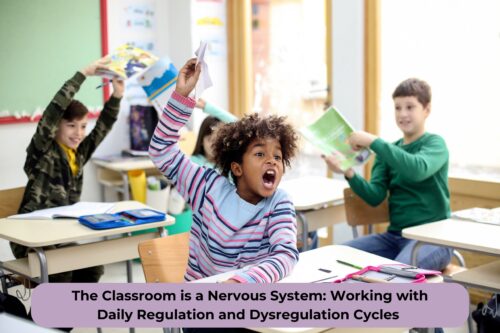 Discover the true importance of regulation and how it's often misunderstood. Don't let regulation be just another buzzword in your vocabulary. Join Judy to explore how regulation and dysregulation cycles affect students and adults throughout the day. Learn how finding moments of regulation in the midst of dysregulation can be a powerful tool in improving your well-being and shifting students’ behaviors. By gaining a deeper understanding of how dysregulation is a natural part of everyday life, we can recognize important clues for supporting students in becoming aware of their own activation and learning effective strategies through challenging moments. Apply this understanding to class-wide activation. Viewing the class as a collective nervous system gives you the ability to support entire groups of students at the same time, without burning out your own nervous system. Empower yourself and your students!
 -
Safety and belonging start with the brain! Creating a safe and welcoming environment is the foundation of classroom culture and community and is crucial for academic success and overall well-being. We spend so much time creating beautiful classrooms, however, providing students with a sense of security can be challenging if we don't understand how the brain perceives safety and threats. You cannot talk someone into feeling safe. Learn to use approaches that foster a sense of safety, nurture trust and belonging, and support students in approaching challenges with curiosity instead of fear as they learn that they can manage to do things that are difficult.
-
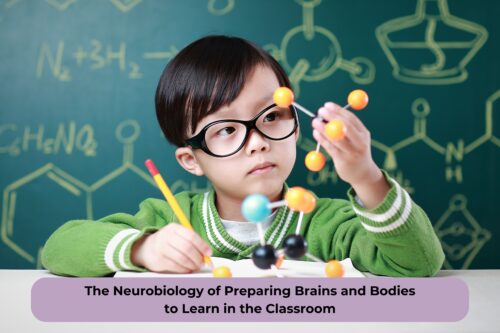 Even highly skilled educators need help to be effective when students are not ready to learn. Stress and anxiety influence daily school life academically and behaviorally, as these impact processing capabilities in the brain, creating dysregulation… And, dysregulation is contagious, growing from one to two students to entire classrooms. You can see the problem if what we’ve been trained to do is ignore certain behaviors. Neuroscience can help us understand what is happening for educators and students in moments of dysregulation and help us learn to recognize when students are not in brain or body states conducive to learning. This is the first step in understanding how to prepare brains and bodies to learn by providing clues about what is needed and what support will move students back to a place of learning.
 -
When strategies that have always worked in the past, are not working, it’s frustrating! In fact, sometimes our responses even seem to make the situation worse. What’s going on? When we learn to identify brain and body states it facilitates using the right strategy at the right time, including understanding why something might work in one moment and not another. When students aren’t in the higher regions of their brains, some strategies meant to support them, actually create escalation. Learn critical classroom strategies that work with students during varying states of arousal, expanding windows of tolerance and getting students back to places of learning. Strengthen your ability to help students grow their capacity for dealing with stress and challenges in and out of the classroom as you support creating new options for behavior.
-
LEARN A SOLID PLAY THERAPY THEORY THAT COMBINES THE POWER OF PLAY WITH INTERPERSONAL NEUROBIOLOGY!
**For program details and dates of when this program is offered, please visit the Synergetic Play Therapy Institute's website**
CLICK HERE FOR MORE PROGRAM DETAILS!!
Have you been searching for ways to create a deeper impact for your clients? Or perhaps you are wanting to improve or learn more about ...- Becoming an external regulator to support children with integration and repatterning the activation of their nervous system.
- Supporting healing at deeper levels through right brain to right brain attuned communication.
- Teaching children interoceptive (body) awareness (...the key ingredient for self-regulation and co-regulation).
- Creating a neuroception of safety for a child when emotional flooding happens.
- Setting boundaries with the brain in mind to not minimize, shame or shut down the child's play, but keep them engaged in their therapy process.
- Building collaborative relationships with caregivers to support their child's therapeutic process.
- Developing goals, tracking a child's therapeutic process, and translating what's happening during the child's therapy session to their caregiver(s) and others in the world.
- Helping children develop a secure attachment to themselves (...a foundation of resilience).
- Applying SPT concepts from a cultural lens for a more inclusive and culturally sensitive clinical orientation where a client's unique experiences and needs are honored.
- How to feel a little more like YOU in the therapy process (...because we know inauthenticity is the fastest way to burnout and compassion fatigue).
Come discover what showing up in the playroom truly means and explore what is happening in the play therapy process, how change occurs, and ultimately what it takes to help children heal at profound levels. And the best part is, you get to be you on the journey!
Check out what past students had to say about their experiences in the course!
"SPT is the missing piece in play therapy. I gained an understanding of who I am in the playroom - a humanness that wasn't there before." -Frances Donohue
Join the growing number of mental health professionals, those in related roles (Child Life Specialists, School Counselors, Occupational Therapists, Coaches, etc.) and parents/caregivers who are learning SPT!
*For program details and objectives, see below.