
Teachers & School Staff Programming
All those working in instructional roles are navigating increasingly complex learning environments. Student needs are rising, expectations continue to expand, and many professionals are being asked to respond to behavioral and emotional challenges without training that fully explains what is happening beneath the surface.
SEI’s programming translates neuroscience and nervous system science into practical approaches you can apply in real classrooms. This supports understanding behavior through a regulation-informed lens while designing learning environments that support both student engagement and adult sustainability.
There are multiple ways to engage with the supports and learning SEI providess, depending on your interests, goals, and the level of depth you are seeking.
Begin Exploring
Many first encounter SEI through free learning opportunities that introduce pieces of our framework.
These resources offer an entry point into our approach, giving you room to explore before choosing whether to engage in deeper learning.
Ways to begin exploring include:
• Free webinars and recorded learning opportunities
• Articles and educational resources available on the SEI website
• The SEI Pathway Quiz, which pulls from all of our learning opportunities and identifies options that align with your role and current challenges
Professional Learning for Teachers and School Staff
If you want to move beyond exploring individual ideas, deepen your understanding of the Synergetic Education framework, and begin applying it in your learning environment, there are three ways people typically engage.
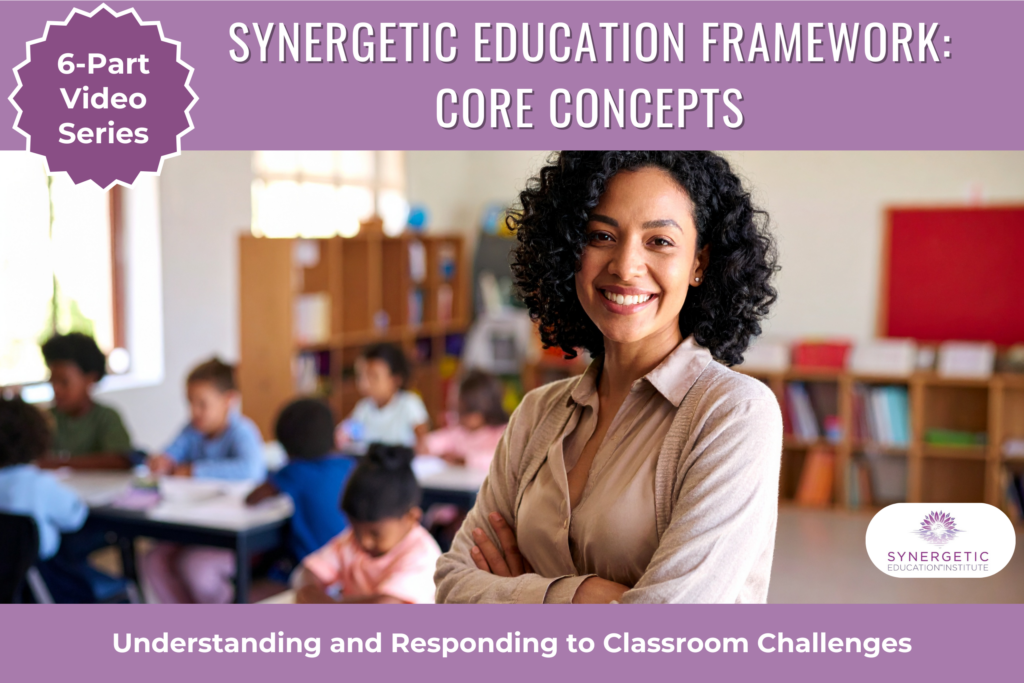
6-Part Video Series
A flexible recorded 8.5-hour learning experience that introduces the neuroscience-informed framework used throughout SEI programming. This series builds nervous system literacy and provides practical strategies educators can begin applying immediately in classroom environments.
- Format: Recorded video series
- Hours: 8.5
- Best for: Understanding the framework and practical classroom strategies
- Investment: $125
Evolution of a Synergetic Educator
An immersive program providing deeper integration of the framework within classroom environments. ESE supports educators in cultivating moment-to-moment responsiveness, designing regulatory classroom environments, and sustaining application when implementation becomes challenging.

- Format: Cohort-based program with live components
- Hours: 21-26
- Best for: Deep integration and guided application
- Investment: $375-$475 depending on cohort
Behavioral Health Program (BHP)
Educators who need to meet Colorado behavioral health relicensure requirements often begin with the 15-hour Behavioral Health Program, which provides a complete pathway to meet the state’s requirements within one cohesive training experience.
- Format: Self-paced training program
- Hours: 15
- Best for: Educators needing relicensure hours and framework overview
- Investment: $149
Choosing Where to Begin
• Begin with the Video Series if you want flexible, self-paced learning that introduces SEI’s framework and offers practical strategies you can apply right away.
• Begin with Evolution of a Synergetic Educator (ESE) if you are ready to deepen your practice and want guided, interactive support applying SEI’s principles in real‑time classroom practice.
• Begin with the Behavioral Health Program (BHP) if you need to meet Colorado behavioral health relicensure requirements while learning the SEI framework and engaging in a comprehensive training pathway.
If you’re unsure where to begin, our SEI Pathway Quiz can help identify the programming options that align with your role and current challenges.
Strengthening Sustainable Classroom Practice
SEI’s work is designed to support:
• Understanding behavior through a regulation-informed lens
• Strengthening in-the-moment responsiveness during challenging interactions
• Designing classroom environments that support regulation and engagement
• Sustaining meaningful impact without relying on chronic overextension
These programs support all those working in schools in deepening their practice in ways that protect their well‑being and reflect the realities of working in educational systems.