
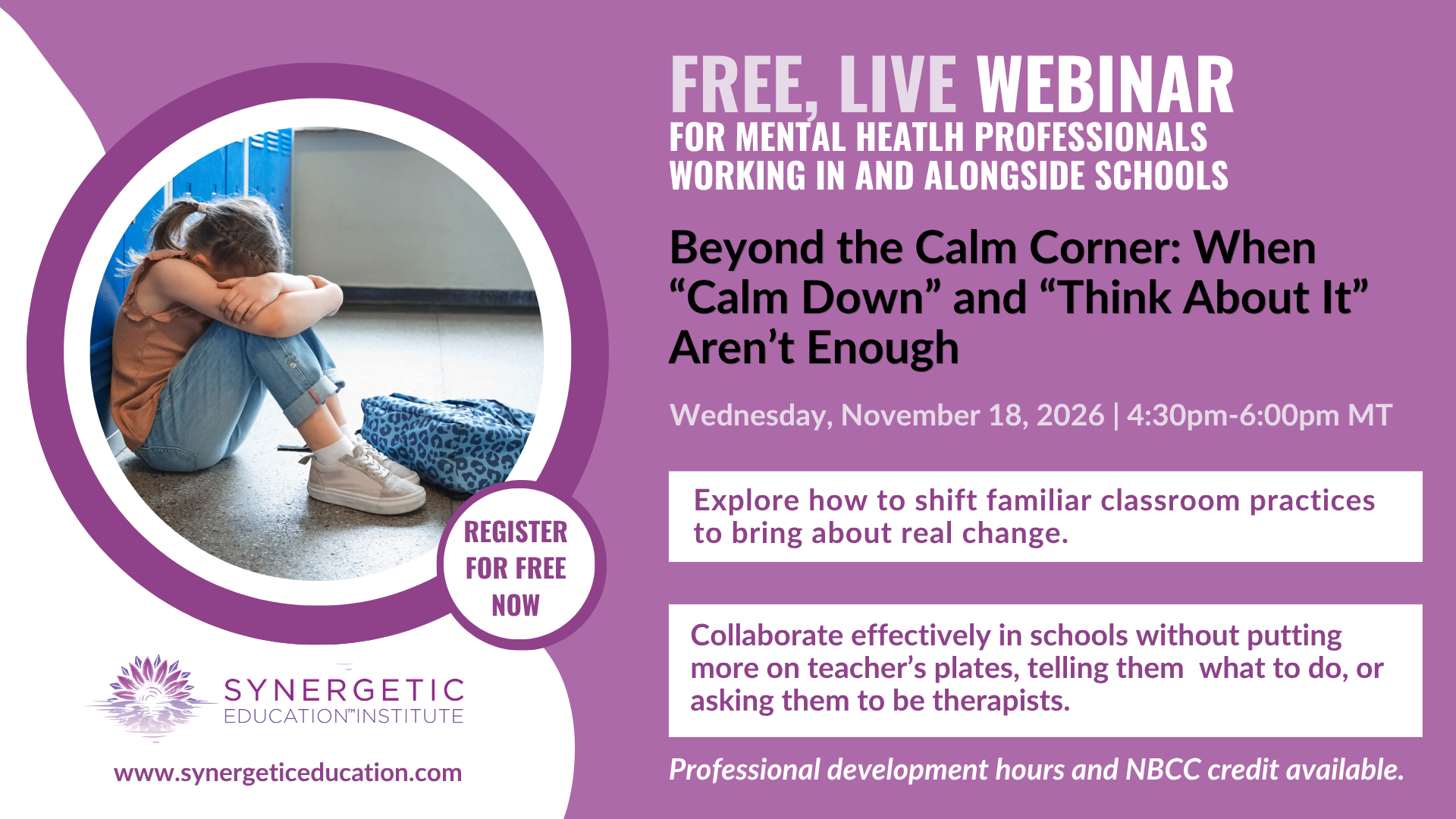
Join us for this free webinar as we explore ways to support educators and schools.
- School Counselors, Psychologists and Social Workers may see interventions in place while the same students continue to struggle.
- Clinical Therapists may struggle to collaborate with schools around support for their clients during the school day.
In this webinar for mental health professionals working in and alongside schools, we’ll explore how familiar practices can help students notice what is happening within them, reflect on their experiences, and develop the capacity to use that awareness. We’ll connect these experiences to interoception and reflective awareness, making sense of why they matter for self-regulation. We’ll also consider how to bring this lens into conversations with educators, using curiosity and questions to find a starting point for collaboration that meets them where they are.
This webinar is for all mental health professionals who work in schools, consult with schools on behalf of clients, or support educators.
What You’ll Learn
☑️ How to explain to educators why familiar regulation and reflection practices may not be producing the intended outcomes.
☑️ How to shift calm corners and reflection forms so they support students in developing interoception and reflective awareness.
☑️ Which questions and approaches support collaboration with educators and help determine where to begin.
☑️ Why the same strategy may work for one student but not another, or in one moment but not the next.
Who Should Attend?
This webinar is designed for all mental health professionals.
💡Join us and discover practical ways to shift what is possible!