

PLEASE READ: If you don’t receive an email immediately after registering please check your spam folder. Remove it from spam so you won’t miss the reminder email just before the webinar along with a follow up email with the link should you not be able to make it live.
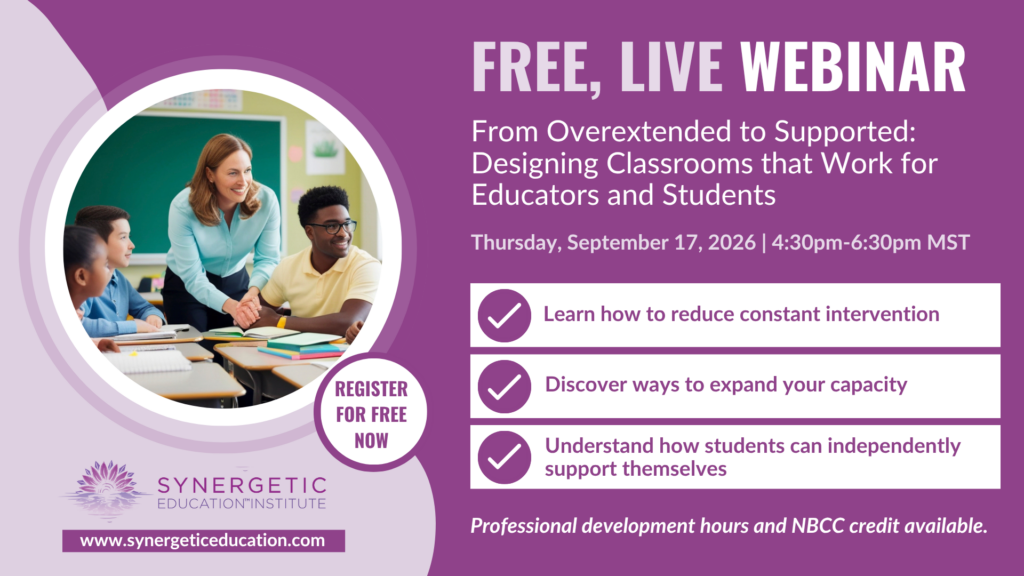
Join us for this free two-hour webinar as we explore creating environments that do more of the work!
🤷♀️Teachers can’t sustainably provide constant individual intervention.
⏰School counselors can’t individually meet every student need.
📆School leaders can’t always be available to help address challenges in the classroom.
So, what’s the answer? Building support into classrooms in ways that allow more students to independently access what they need throughout the day.
Who’s This For?
This supports all educators!
For teachers: Without enough outside support available, you’re left addressing most behavioral needs within the classroom, often without programs or strategies that work consistently.
For student support providers: With large caseloads you need more effective universal support available in the classroom, allowing you to preserve more of your capacity for students who need targeted services.
For leaders: With fewer support staff, many classroom challenges require your involvement, taking time away from other responsibilities. You need universal support that can be implemented in classrooms without requiring teachers to overextend.
For those supporting schools: Without shared language and understanding across education and mental health, it can be challenging to align your work with the realities of schools. Connecting these perspectives creates a stronger foundation for collaboration with educators and schools.
This webinar offers practical insights grounded in brain science for designing classroom conditions that better support both students and the adults working with them.
What You’ll Learn
Explore practical ways to create classroom environments that support:
☑️ Less reliance on constant educator intervention
☑️Fewer disruptions to teaching and learning
☑️Greater student independence
Earn Professional Development Hours
Participants may receive a Certificate of Completion documenting 2 hours of professional development that may be applied toward continuing education or licensure renewal requirements, depending on local district or licensing guidelines.
Mental health professionals are eligible to receive 2 NBCC credit hours.
Join Us
Join us and discover practical ways to let the classroom environment do more of the work!