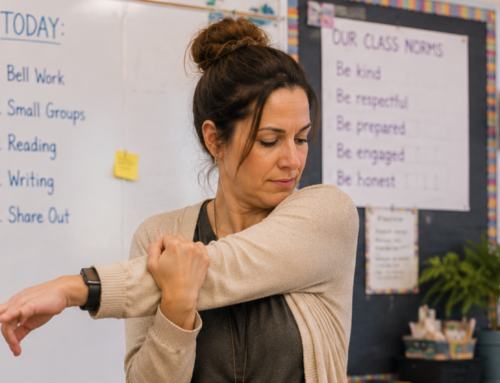

Many of us learned we have five senses, yet the truth is we have more. One of these sensory systems, interoception, helps us notice what is happening inside our bodies. Without strong interoceptive awareness in learning environments, it is harder for educators to notice stress, tension, or overwhelm are occurring. When these experiences accumulate without awareness or response, they can contribute to chronic strain and burnout over time.
Why Interoception Matters
Interoception is a foundational skill for self-regulation because we cannot respond to what we do not notice, leaving us stuck in dysregulated states for longer periods of time. When dysregulated, it becomes harder to stay flexible, think clearly, and access a wider range of responses during stressful and challenging moments in the classroom.
A lack of interoceptive awareness can show up daily in simple ways:
- If you don’t notice that you are warm, why would you take off a layer?
- If you don’t notice you are hungry or thirsty, why would you reach for a snack or drink?
- If you don’t notice you have to go to the bathroom…you get the idea.

What Happens When Interoception is Missing?
Imagine if you couldn’t notice when stress or activation started to build, when your heart rate increased, or your breath started to change. Without awareness, you either do nothing to deal with the build-up of stress and activation or you must rely on someone else prompting you to act, such as someone suggesting that you take a deep breath.
If you couldn’t feel how that breath opened up space in your chest or slowed your heart rate, why would you choose to take a deep breath next time?
How Can Interoception Help You Figure Out What You Need?
Interoceptive awareness helps us notice that we need regulation and identify what kind of regulation might work for us in that moment.
For instance, when I notice that my:
– Toes are crunched up → I might stretch them out.
– Arm is itchy → I might scratch my arm.
– Shoulders feel tight → I might roll my shoulders.
These small actions are forms of regulation because they help us respond to discomfort, tension, or sensations arising in the body. Without interoceptive awareness, it becomes much harder to recognize what our bodies are communicating and identify what kind of response might help in that moment.

How to Develop Interoception
- Create a Contrast and Develop Vocabulary
– Raise one arm above your head and reach up as far as you can.
– Hold it for 10 seconds.
– When you put it down, come up with words that describe how your arm feels.
The contrast we just created made it easier to notice sensations in your body. Additionally, building this type of vocabulary helps you communicate about your experiences.
- Ask yourself, “How do I know?”
Whenever you find yourself thinking, “I am hungry,” ask yourself, “How do I know?” “What sensations in my body are telling me I am hungry?”
The more often you pause and ask this question, the easier it becomes to recognize patterns and cues arising in your body throughout the day.
- Listen to what the sensations in your body are telling you.
Finally, as you practice noticing the different sensations showing up in your body, ask yourself, “What is this telling me?
Make a point of being intentional about asking what clue might this sensation be giving me about what I need in this moment?
Integrating Interoceptive Awareness Into The School Day
Could difficulty noticing internal cues be affecting your students throughout the school day? The answer is likely yes. When students struggle to notice what is happening inside their bodies, independent self-regulation becomes much harder. Providing these simple opportunities helps them notice sensations and develop language for what is happening in their bodies and strengthens interoceptive awareness over time.
Interoceptive Awareness: A Key Concept in Behavioral Health
Interoceptive awareness is explored throughout our Behavioral Health Program, which is designed for Colorado educators who need to complete all three of the new behavioral health and special education relicensure requirements and educators nationwide who seek additional practical strategies to reduce strain and improve what daily work feels like in various learning environments. If you’d like to learn more about interoceptive awareness and how behavioral health can positively impact schools, students, and educator experiences, visit our Behavioral Health Program page
Continue Exploring Nervous System Shifts for Educators
This blog is a part of a summer blog series that is intentionally designed to first support educators in recognizing and shifting patterns within their own nervous systems before exploring how these concepts can be applied in classroom settings. By beginning with educators nervous systems first, the series encourages reflection, increased awareness, and practical nervous system shifts that may help reduce stress throughout the school year.
Enjoying the series so far? Keep following our blog and stay tuned for the exclusive bonus resources we will be sharing later this summer that provide practical ways to strengthen interoceptive awareness with students and in classrooms to support regulation, engagement, and more sustainable learning environments all year long.
To receive special access to these resources, subscribe to our mailing list using a personal email address or phone number so we can reach you during summer break.