


Educators and school professionals this free webinar is for you!
Did you used to believe that being a teacher would be easy and that you’d get lots of time off? 🤣 Working in schools has become even more challenging. Daily stressors, big and small, impact your nervous systems. It’s easy to lose yourself in these moments. When this happens, you carry this heightened state to your next interaction, compounding the stress. By the end of the day, you’re exhausted, and your nervous system is ready to explode or shut down! Then, couple this with our expectations versus the realities of working in schools, and we have the perfect storm fostering feelings of overwhelm, helplessness, and frustration. Explore these and other dynamics impacting your daily functioning and behaviors. Walk away with an understanding that will move you from reacting in the moment, to responding in ways that support your well-being, so you can reclaim our inspiration for teaching.-
 This Free Webinar was recorded on May 10th, 2023 and is for all professionals working with students! As professionals working with students, it's been a long year. Many of us have spent much of it trying to make sense of students' behaviors Maybe even feeling helpless, or angry, not knowing exactly what to do next. We understand your dilemma and don't want you to spend the summer and next year, asking the same questions. Register for this free webinar to explore how behaviors, even those we don't love, can provide a roadmap explaining what's going on AND what we can do about it. If you're asking, “but what if the behavior is disrupting learning for other students?” Great question! We’ll chat about that too. Scroll below for details.
 -
 This Free Webinar was recorded on August 10th, 2022 and is for educators or anyone that works in schools. Stress and anxiety are impacting everyone, making teaching and learning very challenging. To support a healthy learning environment for all of us, we must address our own stress and anxiety first. None of us can be effective when our brains and bodies are overwhelmed. Neuroscience can help us understand what is happening in moments of dysregulation. More importantly, it can guide us in moving through the stress and keeping ourselves healthy. Why does this matter? When we make choices instead of simply reacting, we decrease the likelihood of behaviors escalating for both us and our students! Scroll below for details.
 -
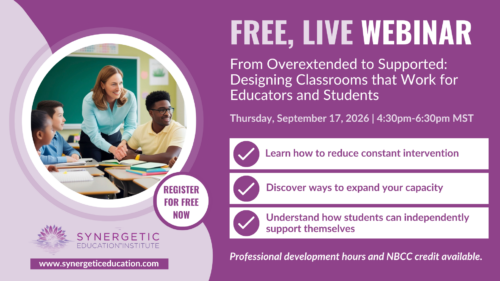 Join us for this free two-hour webinar as we explore creating environments that do more of the work!
Why This Matters Across Roles
For teachers – without enough outside support available, you’re left addressing most behavioral needs within the classroom, often without programs or strategies that work consistently. Constant individual intervention is not sustainable.
For student support providers – with large caseloads, you can’t individually meet every student need. You need more effective universal support available in the classroom so you can preserve more of your capacity for students who need targeted services.
For leaders – with fewer support staff, you’re increasingly called on to address challenges in the classroom, taking time away from other responsibilities. You can’t sustainably be available every time a need arises, and teachers can’t be expected to fill the gap by overextending. Universal classroom support can reduce reliance on both.
For those supporting schools - Without a shared language that bridges education and mental health, it can be challenging to align your work with the realities of school settings. Bringing these perspectives together creates a stronger foundation for collaboration with educators and schools.
So, what’s the answer? Building support into classrooms in ways that allow more students to independently access what they need throughout the day.
Grounded in brain science, this webinar explores practical ways to design classroom conditions that support students and adults without depending on continual educator overextension.
What You’ll Learn
Explore practical ways to create classroom environments that support: ☑️ Less reliance on constant educator intervention ☑️Fewer disruptions to teaching and learning ☑️Greater student independence Who Should Attend? This webinar is designed for all educators and others who impact students, including classroom teachers, behavior and SEL coaches, school counselors, psychologists, social workers, paraprofessionals, and educational leaders. It is also for mental health professionals working in or with schools. Whether you work directly in schools or in private practice, you’ll leave with insights and tools you can use immediately to explore with educators how classroom environments shape what is possible for students and adults. Join Us Register for this free webinar and discover what becomes possible when the environment provides more of the support educators and students need. -
 Keep the momentum going and continue growing and learning! Nurture the bonds you've built, with our 6-month group consultation journey designed for those who’ve completed one of our signature SEI programs. It’s a chance to deepen your learning, stay inspired, and grow together with our vibrant global community. Join Judy for six 1-hour group consultation sessions. This is your space to pause, reflect, and recharge. A place to reconnect with the heart of our work and the people who make it meaningful. Whether you're navigating challenges or celebrating wins, we want to walk alongside you. Time & Dates: 4-5 pm Mountain Time, Denver. Wednesdays 9/16/26, 10/14/26, 11/4/26, 12/2/26, 1/13/27, 2/3/27 (Note: these are also listed in the Product Description tab. Please ignore the Additional Information tab).
 -
 Safety and belonging start with the brain! Creating a safe and welcoming environment is the foundation of classroom culture and community and is crucial for academic success and overall well-being. We spend so much time creating beautiful classrooms, however, providing students with a sense of security can be challenging if we don't understand how the brain perceives safety and threats. You cannot talk someone into feeling safe. Learn to use approaches that foster a sense of safety, nurture trust and belonging, and support students in approaching challenges with curiosity instead of fear as they learn that they can manage to do things that are difficult.
 -
 When strategies that have always worked in the past, are not working, it’s frustrating! In fact, sometimes our responses even seem to make the situation worse. What’s going on? When we learn to identify brain and body states it facilitates using the right strategy at the right time, including understanding why something might work in one moment and not another. When students aren’t in the higher regions of their brains, some strategies meant to support them, actually create escalation. Learn critical classroom strategies that work with students during varying states of arousal, expanding windows of tolerance and getting students back to places of learning. Strengthen your ability to help students grow their capacity for dealing with stress and challenges in and out of the classroom as you support creating new options for behavior.
 -

LEARN A SOLID PLAY THERAPY THEORY THAT COMBINES THE POWER OF PLAY WITH INTERPERSONAL NEUROBIOLOGY!
**For program details and dates of when this program is offered, please visit the Synergetic Play Therapy Institute's website**
CLICK HERE FOR MORE PROGRAM DETAILS!!
Have you been searching for ways to create a deeper impact for your clients? Or perhaps you are wanting to improve or learn more about ...- Becoming an external regulator to support children with integration and repatterning the activation of their nervous system.
- Supporting healing at deeper levels through right brain to right brain attuned communication.
- Teaching children interoceptive (body) awareness (...the key ingredient for self-regulation and co-regulation).
- Creating a neuroception of safety for a child when emotional flooding happens.
- Setting boundaries with the brain in mind to not minimize, shame or shut down the child's play, but keep them engaged in their therapy process.
- Building collaborative relationships with caregivers to support their child's therapeutic process.
- Developing goals, tracking a child's therapeutic process, and translating what's happening during the child's therapy session to their caregiver(s) and others in the world.
- Helping children develop a secure attachment to themselves (...a foundation of resilience).
- Applying SPT concepts from a cultural lens for a more inclusive and culturally sensitive clinical orientation where a client's unique experiences and needs are honored.
- How to feel a little more like YOU in the therapy process (...because we know inauthenticity is the fastest way to burnout and compassion fatigue).
Come discover what showing up in the playroom truly means and explore what is happening in the play therapy process, how change occurs, and ultimately what it takes to help children heal at profound levels. And the best part is, you get to be you on the journey!
Check out what past students had to say about their experiences in the course!
"SPT is the missing piece in play therapy. I gained an understanding of who I am in the playroom - a humanness that wasn't there before." -Frances Donohue
Join the growing number of mental health professionals, those in related roles (Child Life Specialists, School Counselors, Occupational Therapists, Coaches, etc.) and parents/caregivers who are learning SPT!
*For program details and objectives, see below.
-
Join this self-paced, 100% online behavioral health program that meets the Colorado’s Department of Education behavioral health relicensure requirements and equips professionals nationwide to champion student well-being, navigate classroom challenges with confidence, and learn about federal education mandates.
About the Program In just 15 hours, teachers, school counselors, psychologists, social workers, educational leaders, paraprofessionals, behavioral specialists, and social‑emotional behavior support coaches will learn practical strategies to increase engagement, improve students’ focus, and support the well‑being of both students and educators. The program is grounded in trauma‑informed, neuroscience‑backed, and neuro‑responsive practices.
By taking SEI’s Behavioral Health Program, you’ll gain practical knowledge in:
- How stress and anxiety impact learning and behavior
- Expanding students’ windows of tolerance for better stress management
- Nervous system regulation strategies to move from reaction to intention, and reduce burnout
- Federal and state education laws, including IDEA and ECEA
- Suicide awareness and prevention resources
- Systemic practices that support all learners and foster supportive learning environments.
Unique Program Benefits
- Meets all three requirements from the Colorado Department of Education for Behavioral Health Relicensure met in just one program
- Designed by educators for educators
- Brain-based strategies that improve school communities and culture
- Continuing Education credits
- Complete on your own time from anywhere
- 1-year access to program and modules
- Neuroscience, Trauma-Informed Practice, and Legal Clarity All-in-One
Why SEI SEI is centered around student and educator growth, providing educators with evidence-based strategies rooted in neuroscience and nervous system regulation to reduce workload, navigate daily classroom challenges with confidence and ease, and help students learn and thrive.
Get Started with SEI’s Program
Join us, not to meet a standard, but to create a new one! -
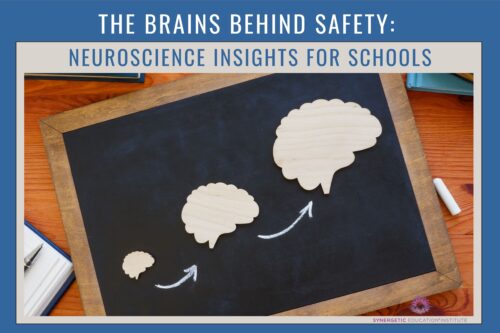 Join us for this 2-hour course as we explore how Safety and Belonging Start with the Brain! A felt sense of safety and belonging isn’t just nice to have—it’s essential for learning. While educators pour energy into creating welcoming spaces, students’ brains don’t always interpret experiences in those environments as safe. Fear-based behaviors can emerge even in classrooms that look warm and inviting. As school-based or clinical mental health professionals, or others working with adults, we have a unique opportunity to bridge that gap. By helping educators understand how the brain perceives safety and threat, we can shift their approach and profoundly impact students' sense of security and connection. This course offers practical insights grounded in brain science to support student mental health and help every learner feel seen, safe, and ready to engage. What You'll Learn: ✔️How to create emotionally safe brain-aligned spaces that help students move through dysregulation and back to connection. ✔️Strategies to build trust and belonging within classrooms and across school communities, creating a foundation for thriving relationships. ✔️Tools to shift mindsets – empowering students and educators to approach challenges with curiosity instead of fear, promoting resilience and growth. Who Should Attend? This training is designed for school-based and clinical mental health professionals, or others who support educators and students. Whether you work directly in schools or in private practice, you’ll leave with insights and tools you can use immediately to help educators bridge the gap between creating welcoming environments and cultivating felt safety and a sense of belonging. 💡 Join us and learn how to foster felt safety and belonging for both students and educators.
 -
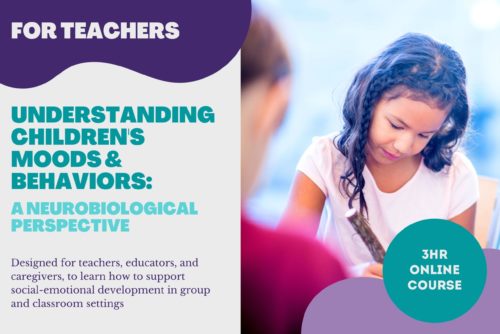 This is a therapist-designed course that assists teachers, early-childhood educators, and caregivers in learning how to support the nurturing of social-emotional development in a group and classroom setting. Looking for a fresh explanation on why children feel and act the way they do? Curious about the relationship between brain development and perception? Want to know how the nervous system lives up to its name? Learn this and more! Scroll down for course details and objectives.
 -
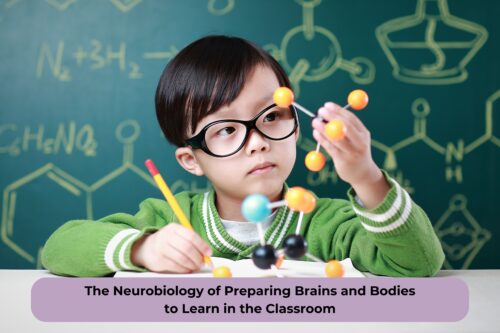 Even highly skilled educators need help to be effective when students are not ready to learn. Stress and anxiety influence daily school life academically and behaviorally, as these impact processing capabilities in the brain, creating dysregulation… And, dysregulation is contagious, growing from one to two students to entire classrooms. You can see the problem if what we’ve been trained to do is ignore certain behaviors. Neuroscience can help us understand what is happening for educators and students in moments of dysregulation and help us learn to recognize when students are not in brain or body states conducive to learning. This is the first step in understanding how to prepare brains and bodies to learn by providing clues about what is needed and what support will move students back to a place of learning.