
Many educators return from weekends, breaks, or even summer vacation only to find the same stress patterns quickly reappear. When these patterns continue over time, they can contribute to chronic strain and eventually lead to educator burnout.
Throughout our summer blog series, we’ve been sharing how burnout isn’t just about being tired and why rest or time off alone isn’t always the solution. Burnout is connected to how stress and activation build up within the nervous system.
The Connection Between the Nervous System and Stress
Educators are constantly navigating sensory, emotional, relational, and environmental demands. Our nervous systems process these demands, manage energy, and respond to ongoing stress throughout the day.
Yet, did you know that we are consciously aware of a very small amount of the internal and external sensory information we are taking in each moment? Even outside of awareness, all of this input is still impacting our nervous systems and shapes our energy, responses, and capacity.
Without realizing it, we can carry stress and activation from one interaction into the next, which can look like:
- Reacting in ways that don’t align with how we want to respond
- Feeling emotionally overloaded by the end of the day
- Shutting down, becoming reactive, or feeling depleted without fully understanding why
These experiences are a reflection of how the nervous system is processing stress and information.
Carrying Invisible Stress Throughout the Day
Imagine that you are supporting a dysregulated student or navigating a difficult interaction with a colleague. It’s like someone handed you an invisible boulder. You can’t see it, but your nervous system is taking in these challenging experiences and carrying a lot. Then another interaction happens. Another boulder. By the end of the day, many educators are carrying far more than they consciously realize. This helps explain why we sometimes explode, shut down, or feel completely depleted without fully understanding why.
In our last blog, we highlighted another nervous system shift: interoceptive awareness. Without interoceptive awareness, it becomes much harder to recognize what our bodies are communicating and identify what kind of response might help in that moment.
Once we notice what is happening, we can gain a better understanding and respond to it differently.

A Nervous System Shift: Notice and Name Your Experience
Learning to notice and name our experiences in real time is another nervous system shift for educators that can help interrupt accumulated stress and reduce some intensity surrounding it.
When we are highly stressed, we often intensely experience the frustration, urgency, or overwhelm. Being able to name the experience, either out loud or in your head, creates just enough space for the nervous system to shift from automatic reactivity into greater awareness and flexibility.
Try This Practice
- Think of a recent situation that felt mildly stressful or frustrating (around a 5 out of 10 intensity).
- Set a timer for 30 seconds.
- Briefly place yourself back in the experience.
- When the timer ends, ask yourself: What am I noticing right now?
- Then simply name what you notice, which might be tight shoulders, shallow breathing, clenched jaw, heaviness, frustration, or restlessness, for example.
- Finally, let whatever you notice guide you to what might feel helpful in that moment.
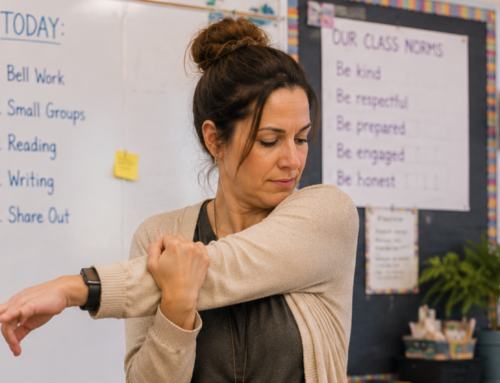
When I tried this practice myself, I noticed tightness in my chest and shoulders, which prompted me to take a few deep breaths and stretch.
Why Noticing and Naming the Experience Matters
The experience does not disappear, but awareness creates enough space for us to respond more intentionally instead of automatically carrying the activation into the next moment.
In fast-paced school environments, even a brief pause to notice and name what is happening can help the nervous system release some of what it is carrying instead of unconsciously holding it throughout the day. Sometimes simply naming the experience internally is enough to create a shift.
How to Support Your Students Through This Practice
Similar to educators, students are also constantly taking in and being impacted by internal and external sensory data throughout the school day. When educators practice noticing and naming their own experiences, they are less likely to unintentionally escalate challenging moments and students can begin borrowing and developing this skill.
Remember, this skill takes practice. Sometimes a small visual cue, like a bracelet, sticky note, or reminder on your desk, can help build awareness throughout the day. The goal is not to eliminate stress, but to stop carrying every moment of stress into the next interaction.
Our Summer Blog Series Continues: Stay Connected
Our summer blog series was designed to help educators understand how nervous system shifts connected to stress and burnout can lead to regulation, and educator sustainability.
In our next blog, we invite you to explore how movement can help release activation and support nervous system regulation throughout the school day.
To receive future blogs and special access to resources to use with students in the new school year, subscribe using a personal email address so we can stay connected outside of the school year.